


Ferric sulphate helps textiles plants improve coagulation, color reduction, and clarification to meet discharge goals and keep operations steady.
Ferric sulphate is a widely used inorganic coagulant for water and wastewater treatment, including textiles effluents where color and suspended solids must be controlled for permit compliance. Market analysis point to sustained industrial use and demand, reinforcing its reliability for treatment programs and procurement planning.
If dye-intensive campaigns are stretching your clarifier, the coagulant you choose will shape compliance, cost, and uptime. In the sections below, you’ll see what ferric sulphate actually does in textile wastewater, how it stacks up against alum and ferrous sulfate, and the purchasing and EHS checkpoints that matter; distilled from supplier and market sources only.
What is ferric sulphate and why does it matter for textiles?
Ferric sulphate is an iron(III) salt used as an inorganic coagulant for water and wastewater treatment. In textiles, it helps aggregate color bodies and colloids so they settle or filter more easily, supporting discharge compliance and steady operations, per product and application notes and market analyses.
Core composition and function
- Composition and nature: Iron(III) sulfate, commonly supplied as a liquid coagulant for treatment applications.
- Primary role: Destabilizes charged particles and color-bearing compounds so they can be separated in clarification steps, which is central to dyehouse and finishing effluent control in textiles.
- Market relevance: Water treatment remains one of the key demand centers for ferric salts according to industry market tracking.
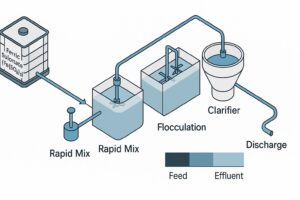
Ferric sulphate dosing point improving coagulation and color removal in textile wastewater—rapid mix, flocculation, and clarifier with before/after effluent color.
How does ferric sulphate improve color removal and effluent quality in textiles?
Application notes describe ferric sulphate as effective for coagulation/clarification in colored effluents, aiding color reduction and suspended solids removal. This supports regulatory compliance and consistent plant throughput in textiles, aligning with widely cited water treatment use cases and market demand patterns for ferric salts.
- Color reduction support: Coagulates color-bearing species so downstream clarification can meet site discharge targets.
- Suspended solids control: Aggregates colloids/fines to improve settling and filtration steps.
- Operational stability: Contributes to predictable clarifier performance, which helps maintain daily production schedules in textiles.
- Demand signal: Broad water treatment adoption of ferric salts is reflected in market coverage, supporting long-term availability planning.
Where does ferric sulphate fit versus alum and ferrous sulfate in textile operations?
Selection often compares ferric sulphate with aluminum sulfate (alum) and ferrous sulfate. They have a shared role as inorganic coagulants but note differences in chemistry and typical use contexts. Choosing among them depends on effluent characteristics and treatment goals referenced in supplier materials.
Selection lens for procurement and technical buyers
Below is a concise comparison drawn that discuss these coagulants’ roles in water treatment:
| CRITERIA | FERRIC SULPHATE | ALUMINUM SULFATE (ALUM) | FERROUS SULFATE |
| Coagulant family | Iron(III) sulfate | Aluminum salt | Iron(II) sulfate |
| Typical role cited | Inorganic coagulant for water/wastewater treatment, including colored effluents | Widely used coagulant for water/wastewater treatment | Used in water/wastewater; chemistry differs from ferric |
| Color treatment context | Referenced for coagulation in colored/industrial effluents | Also used broadly; selection is case-dependent | Applied in treatment with distinct redox behavior |
| Selection basis | Effluent chemistry and treatment targets determine which coagulant fits | Same | Same |
What procurement and compliance factors should supply chain leaders consider?
Procurement should verify product grade, documentation, packaging, and delivery reliability, while compliance teams align storage/handling with supplier guidance. Manufacturer pages and market reports highlight availability, industrial supply capability, and water treatment demand; useful signals for planning in textiles operations.
Specifications and documentation
- Grade and consistency: Confirm ferric sulphate grade suitable for wastewater treatment per supplier documentation.
- Product data: Request technical sheets/SDS and application notes provided by suppliers or distributors.
- Regulatory documentation: Ensure documentation aligns with internal EHS and external permit conditions; supplier pages and market coverage indicate established industrial use and supply networks.
Packaging, logistics, and continuity of supply
- Packaging: Check available formats (commonly liquid supply) as indicated by supplier/manufacturer information.
- Lead times and continuity: Market coverage of ferric sulphate demand in water treatment suggests stable industrial consumption; factor this into planning and inventory strategies for textiles plants.
- Delivery capability: Manufacturer/distributor pages highlight industrial shipping capabilities; relevant for sites with strict receiving windows and bulk offloading needs.
Storage, handling, and EHS alignment
- Handling practices: Follow supplier-provided handling and storage guidance in SDS and product literature.
- Training and controls: Ensure site procedures reflect the supplier’s precautions for receiving, storage, and dosing equipment, aligned with local permits and internal SOPs.
- Auditable compliance: Maintain records of product specifications, incoming quality checks, and usage logs to support inspections and sustainability reporting—consistent with established industrial chemical management expectations.
What KPIs link ferric sulphate to better business outcomes in textiles?
Ferric sulphate as a coagulant that supports clearer effluent and steadier operations. Procurement and EHS teams can connect this to KPIs such as discharge compliance rate, unplanned downtime related to clarification, and chemical availability risk, as informed by supplier and market sources.
KPI alignment for decision-makers
- Compliance rate: Track monthly permit conformance for color and solids after coagulation/clarification steps supported by ferric sulphate.
- Operational stability: Monitor clarifier performance metrics that indicate consistent solids separation supporting production schedules in textiles.
- Supply assurance: Use market intelligence showing established demand to gauge supply risk and set safety stock and contracts accordingly.
- Documentation readiness: Audit SDS availability, delivery documentation, and batch certificates from suppliers/manufacturers for audit readiness.
Ferric sulphate for textiles: practical conclusions and next steps
In conclusion, ferric sulphate is a reliable inorganic coagulant used in water and wastewater treatment, with relevance to dye-laden effluents in textiles. For organizational outcomes, align product selection, supplier documentation, handling, and logistics with internal KPIs and compliance needs.
Ferric sulphate is positioned in supplier and market assessments as a dependable coagulant for colored and industrial effluents, supporting compliance, routine operation, and planning in textiles wastewater contexts. Manufacturer information further indicates industrial supply capability and product availability consistent with ongoing treatment needs.
If your textiles operations require Ferric sulphate or other industrial chemicals, contact TZ Group, a dependable partner for specification, aligned supply, documentation support, and on-time deliveries. Let’s scope your treatment goals and build a procurement plan that supports compliance and steady throughput across your facilities.
