

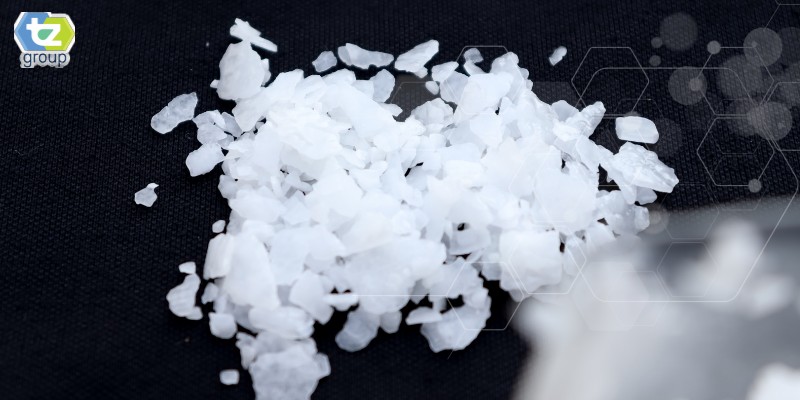
In kraft mill operations, caustic flakes support pulp & paper delignification by providing a concentrated sodium hydroxide source for alkaline cooking, bleaching support, pH correction, and white liquor make up. In fact their value is strongest where controlled dissolution, dry storage, shipment flexibility, and lot quality documentation are part of the mill’s operating discipline.
Industrial mills depend on stable alkali chemistry to separate cellulose fibers from lignin, keep bleaching stages under control, and protect chemical recovery balance. When sodium hydroxide quality, concentration, or delivery timing changes, the effect can move quickly across cooking performance, washer load, pH correction, recovery chemistry, and safe handling routines. For mills working with them, the decision goes beyond product form and becomes a question of purity, storage discipline, dilution control, documentation, and supplier reliability. Therefore, keep reading to learn more about it.
What is the role of Sodium Hydroxide in the kraft pulping process?
Sodium hydroxide is part of white liquor chemistry used to dissolve lignin during kraft pulping. Specifically, within this alkaline system, sodium hydroxide works with sodium sulfide to separate cellulose fibers from the lignin structure that binds wood together, allowing the pulp stream to move into washing and bleaching stages.
It dissolves lignin during cooking
Sodium hydroxide provides the alkaline strength needed to break down lignin during kraft cooking. Its role is to help separate cellulose fibers from the lignin structure that holds wood together, allowing the pulp to move into washing, screening, and bleaching with better process control.
Helps prepare white liquor for kraft pulping
Sodium hydroxide is a main component of white liquor; the alkaline cooking solution used in kraft pulping. When prepared with consistent concentration and quality, it helps maintain stable cooking conditions, supports delignification, and keeps the chemical recovery loop aligned with mill operating targets.
Why do Caustic Flakes offer superior handling in specific mill environments?
Mills often prefer this format when requiring a dry, concentrated alkali solution that offers flexible storage and controlled dissolution. Their solid form can reduce the need to handle large volumes of liquid caustic, while still requiring strict moisture control, corrosion resistant equipment, dust control, and trained handling procedures.
Reduces dependence on bulk liquid storage
Facilities store this dry sodium hydroxide format in sealed packaging instead of relying on dedicated liquid caustic tanks. It fits facilities with limited tank capacity, variable alkali demand, or receiving conditions that make bulk liquid handling less practical.
Allows controlled on site dilution
Process teams dissolve the solid format into the exact concentration required for specific mill operations, gaining better control over solution strength. Proper water addition, agitation, temperature control, and corrosion resistant equipment manage the dilution process effectively.
Supports flexible inventory planning
Packaged material can help mills align storage, shipment timing, and backup stock with production needs. This format also facilitates lot traceability, controlled rotation, and documented receiving practices whenever facilities require uninterrupted sodium hydroxide availability.
How do mills control pH levels for optimal bleaching and fiber recovery?
Mills control pH by dosing alkaline chemistry into bleaching and extraction stages under measured process conditions. Sodium hydroxide supports caustic extraction, helps remove solubilized lignin fragments, and helps maintain the alkaline range needed for downstream brightness, washer performance, and fiber quality control.
Bleaching needs stable alkaline extraction
After delignification, pulp can still carry residual lignin and colored compounds. Alkaline extraction helps remove soluble lignin products and prepares the fiber stream for later bleaching stages.
Caustic flakes can support this function when dissolved into controlled solutions that meet the mill’s target concentration. The operating priority is steady pH response, not aggressive overcorrection.
pH control protects yield and fiber quality
Excess alkali can increase unwanted fiber degradation. Insufficient alkali can leave more residual lignin and raise pressure on bleaching chemistry.
This balance is crucial. For this reason, pH measurement, feed control, and solution strength verification are tied to both quality and cost. Technical buyers should treat product consistency as part of fiber recovery control.
How are chemical recovery boilers and white liquor preparation managed?
Chemical recovery boilers and white liquor preparation are managed through chemical balance, controlled combustion, smelt handling, causticizing, and liquor quality control. The goal is to recover sodium- based chemicals, return them to the kraft cycle, and maintain white liquor strength for stable pulping performance.
Chemical recovery boilers
Recovery boilers are managed by concentrating black liquor, burning its organic content, and recovering inorganic sodium compounds as smelt. Operators control liquor solids, combustion conditions, steam generation, smelt flow, and emissions systems to keep the recovery cycle stable and protect boiler performance.
White liquor preparation
White liquor preparation is managed by dissolving smelt into green liquor, clarifying impurities, and converting sodium carbonate into sodium hydroxide through causticizing. The prepared white liquor is then controlled for active alkali, sulfidity, clarity, and concentration before returning to kraft cooking.
Global Supply Chain Insights for Bulk Caustic Flakes
Bulk caustic flakes should be reviewed through product purity, packaging condition, supplier reliability, documentation, lead time, and delivery format. For pulp & paper mills, the right purchase decision protects sodium hydroxide availability, supports safe receiving, and reduces the risk of disruptions in pulping, bleaching, and chemical recovery operations.
Confirm Product Quality Before Purchase
Mills should review assay, impurities, moisture exposure risk, packaging integrity, and batch traceability before approving supply. These checks help ensure that the material can be dissolved predictably and used in sodium hydroxide solutions without adding unnecessary variability to mill operations.
Review Documentation and Compliance Requirements
Suppliers should back every shipment with current SDS, a certificate of analysis, clear labeling, transport documentation, and storage guidance. This helps receiving, safety, procurement, and plant teams work from the same information before the material enters controlled storage or process preparation.
Plan Lead Times and Delivery Formats
Bulk purchasing should match production demand, storage capacity, and delivery frequency. Buyers should confirm whether the supplier can support containers, pallets, drums, or other agreed formats, while maintaining reliable lead times and clear communication around availability.
How does chemical continuity protect pulp & paper Performance?
High purity caustic flakes can help pulp & paper mills manage delignification, bleaching support, pH correction. They also simplify chemical recovery planning with a reliable sodium hydroxide source. Their value depends on product quality, careful dissolution, dry storage control, regulatory discipline, and a supplier that understands industrial delivery risk.
When your operation needs caustic flakes or other industrial chemicals, TZ Group can help coordinate supply under responsible handling practices, consistent quality standards, and delivery planning aligned with production needs. Contact us to secure a reliable supply plan for caustic flakes and other industrial chemicals, with the quality, documentation, and delivery discipline your mill requires.
FAQS
What do operators use caustic flakes for in kraft pulping?
They serve as a solid sodium hydroxide source that workers dissolve into alkaline solutions for kraft pulping support, white liquor make up, pH control, and bleaching related extraction. Their role depends on mill process design and approved chemical handling procedures.
Are caustic flakes safer than liquid caustic soda?
They are corrosive and require trained handling, dry storage, proper PPE, dust control, compatible equipment, and controlled dissolution. Their dry format can offer logistics flexibility, but safety depends on procedures and operator discipline.
Why does sodium hydroxide help delignification?
Sodium hydroxide creates alkaline conditions that help dissolve lignin structures binding cellulose fibers. In kraft pulping, it works with sodium sulfide in white liquor to release fibers for washing, bleaching, and further processing.
What documents should buyers request from a caustic flakes supplier?
Buyers should request a certificate of analysis, SDS, batch identification, packaging details, country of origin, transport documents, and storage guidance. These records help purchasing, compliance, receiving, and plant teams confirm that the material fits site requirements.
How do I choose a reliable caustic flakes supplier?
A reliable caustic flakes supplier should provide consistent quality, current SDS, certificate of analysis, clear batch identification, proper packaging, and dependable delivery planning. For pulp & paper operations, these requirements help protect alkali availability, safe receiving, and continuity across pulping, bleaching, and recovery processes.
