

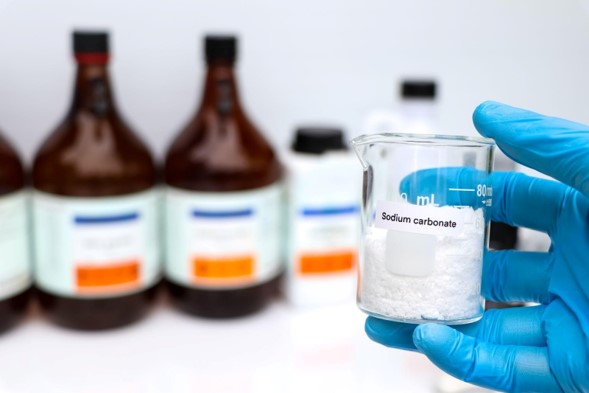
Sodium carbonate light uses three high-volume sectors: textiles (alkalinity control for reactive dyeing and preparation), soap/detergent (alkalinity and builder role), and glass (flux in soda-lime glass batch chemistry). For supply chain and compliance teams, the value is predictable pH performance, consistent quality documentation, and safe, auditable handling aligned with hazard communication expectations.
Operational consistency in large-scale manufacturing depends on disciplined raw material control, and sodium carbonate light uses directly influence pH management, cleaning chemistry, and batch behavior in textile, soap/detergent, and glass plants. Across textiles, detergents, and glass, purchasing teams keep seeing the same question: how do we keep quality stable while audits and downtime risks increase? This note maps what drives consistency; spec control, documentation, handling, and supplier discipline; when soda ash moves from commodity to process-critical input.
What is sodium carbonate light, and what does “light” change in plant operations?
Sodium carbonate light is soda ash (Na₂CO₃) supplied in a lower-bulk-density form than dense grades, which can influence conveying, dust control, and dissolution behavior. The chemistry is the same compound; the operational differences come from physical form. Plants choose the form that best fits feeders, mixing systems, and housekeeping controls.
Light vs dense
| ATTRIBUTE | SODIUM CARBONATE LIGHT | SODIUM CARBONATE DENSE | WHY IT MATTERS TO BUYERS |
| Chemical identity | Same (Na₂CO₃) | Same (Na₂CO₃) | Same regulatory identity; specs still matter |
| Physical form | Lower bulk density powder/granular | Higher bulk density granular | Impacts storage volume, feeding, dust potential |
| Handling focus | Dust control, flow consistency | Flow and segregation control | Impacts housekeeping and feeder tuning |
| Common selection driver | Dissolution/handling fit | Bulk handling efficiency | Align grade to your equipment |
Which specifications matter most when buying soda ash for regulated manufacturing?
The most important specifications are those that affect process stability and audit readiness: assay/purity, moisture, insolubles, and a documented impurity profile aligned with your product and wastewater limits. Buyers should require a current SDS, a lot-specific COA, and change-notification discipline to prevent surprises in dyeing, cleaning, or glass batch behavior.
Why this ties to soda ash industry applications
Across soda ash industry applications, the cost of inconsistency is often not the purchase price; it’s rework, wash-offs, out-of-spec batch chemistry, unplanned maintenance, or permit scrutiny driven by variable effluent pH and solids
Why do textile teams rely on sodium carbonate as a textile chemical additive in reactive dyeing?
In reactive dyeing of cellulosic fibers, sodium carbonate is used to raise pH and promote the reaction between reactive dyes and fiber functional groups, supporting fixation and shade development. Because pH affects reaction pathways and hydrolysis, consistent alkalinity control is a core reason sodium carbonate remains a standard textile input.
Where textile chemical additives requirements show up in operations
Textile teams often evaluate textile chemical additives by:
- pH control consistency during dosing
- Insolubles that may contribute to deposits or filtration load
- Impurity sensitivity tied to shade reproducibility and wash-off demand
What buyers should align with plant managers
- Confirm the grade matches the dosing method (solution make-down vs direct addition)
- Validate that the COA parameters match the mill’s critical-to-quality needs
- Require supplier change control when source or processing changes
(Procurement best practice; grounded in QA systems common to regulated manufacturing)
How does sodium carbonate light support soap and detergent manufacturing performance?
In detergent and cleaning formulations, sodium carbonate is widely used as an alkalinity source and water-softening builder component that supports cleaning by shifting pH and helping manage hardness ions. In soap/detergent plants, consistent physical form improves batching, dissolution, and repeatability in mixing operations.
Key functions buyers should map to formulation needs
Across soda ash industry applications, the detergent/soap segment typically values sodium carbonate for:
- Alkalinity control (supports cleaning chemistry)
- Builder role (supports performance in hard water systems)
- Processing practicality (dry blending or solution preparation)
Handling considerations that affect total cost
- Dust management and housekeeping in bag dumping or conveying areas
- Moisture protection to prevent caking and flow problems
- Standardized receiving inspection tied to COA and packaging integrity
How does sodium carbonate light improve glass melting efficiency and batch consistency?
In soda-lime glass production, sodium carbonate provides sodium oxide in the batch and acts as a flux, helping silica-based mixtures melt more efficiently than silica alone. This supports stable melt behavior and consistent batch chemistry, which are key levers for quality control in continuous glass operations.
Why glass manufacturers specify sodium carbonate as a strategic batch material
Glass plants value sodium carbonate because its role in the batch is foundational, not optional. It supplies sodium content and supports melting behavior that underpins throughput and product consistency in soda-lime glass manufacturing. These are core reasons soda ash is repeatedly identified as a primary end-use input in industry commodity reporting.
Operational advantages buyers and plant managers care about
- Batch chemistry consistency: A controlled Na₂CO₃ input supports repeatable batch formulation and reduces the need for frequent recipe adjustments.
- Melting support through flux behavior: Soda ash functions as a fluxing source of sodium in the batch, enabling more practical melting conditions than silica-only mixtures.
- Continuous-operation fit: Because many furnaces operate continuously, consistent raw material supply and documentation support steady-state control and predictable operations.
What are the main safety, handling, and regulatory checkpoints for sodium carbonate light?
Sodium carbonate is commonly communicated as an irritant (especially to eyes) so plants typically require basic PPE, dust control, and clear SDS-based training under hazard communication programs. EHS teams also focus on storage conditions that prevent caking and on housekeeping that reduces airborne dust during transfer and bag handling.
Practical controls EHS teams commonly require
- Eye protection and gloves suitable for irritant dusts (per SDS)
- Local exhaust ventilation or dust capture at transfer points
- Dry storage, sealed packaging, spill cleanup procedures that avoid dust clouds
Compliance documentation to keep current
- SDS revision control and employee training records
- Lot traceability (COA retained to match finished-product batches)
- Supplier change notifications for source/process changes
(General compliance practice; OECD SIDS supports hazard and handling basis)
From commodity to control point: Source Sodium Carbonate Light with confidence
Sodium carbonate light supports three demanding value chains because it delivers reliable alkalinity and well-characterized industrial chemistry when sourced and controlled correctly. For supply chain leaders and compliance teams, the win is fewer surprises: stable specs, auditable documentation, and deliveries that match continuous operations.
Sodium carbonate light is a truly versatile chemical that fulfills essential functions in a diverse range of industrial applications. From water treatment to the manufacturing of pharmaceuticals and chemicals, its utility is undeniable. Understanding the uses and applications of this chemical is not only crucial for professionals in handling and risk management but is also essential for advancing more sustainable processes.
If your industry requires the acquisition of this chemical or other industrial chemicals, feel free to contact us, at Tz Group we are your most reliable supplier. Let’s develop your next project together under the best practices and quality standards!
