

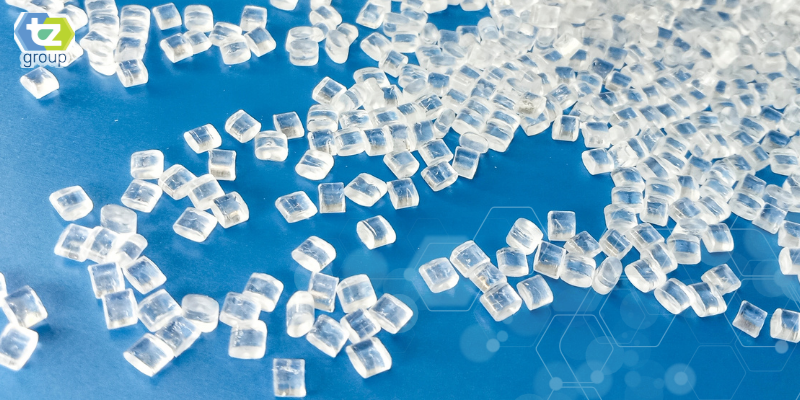
Methacrylic acid uses start with one industrial reality. It is a reactive carboxylic acid monomer that helps manufacturers build acrylic resins and other polymers with controlled adhesion, clarity, durability, and processing behavior. In polymer manufacturing, its value comes from the combination of a polymerizable double bond and an acid functional group that can change how the final system bonds, disperses, and performs.
Industrial buyers need to know where methacrylic acid fits in resin design, why it appears in coatings and adhesives, and which storage controls reduce handling risk. Keep reading to learn how you could benefit from it.
What Is Methacrylic Acid
Methacrylic acid is an unsaturated carboxylic acid that industries widely use as a raw material in polymer production. Its molecular formula is C4H6O2. Furthermore, it´s structure combines a carbon- carbon double bond with a carboxyl group, which allows polymerization and chemical interaction inside resin systems.
A functional monomer for controlled resin design
In practical terms, methacrylic acid is a feedstock. More importantly, a functional monomer changes how polymers behave during synthesis. Furthermore, the double bond supports free radical polymerization. Meanwhile the acid group contributes polarity and interaction with other components in the formulation.
Why it stands apart from acrylic acid
Methacrylic acid and acrylic acid belong to the same general family, but methacrylic acid contains an additional methyl group. That structural difference gives methacrylic acid distinct behavior. It also makes it important in materials tied to polymethyl methacrylate and related acrylic resins.
What Chemical Structure and Properties Define Its Performance
Methacrylic acid performs as a polymer building block due to its unsaturated bond, carboxylic acid functionality, and moderate acidity. Reported data identify it as a colorless liquid with a melting point around 15 to 16 degrees Celsius. Aditionally, it has a boiling point near 161 degrees Celsius, and a pKa close to 4.65 to 4.66.
The double bond drives polymer formation
The carbon-carbon double bond is the entry point for free radical polymerization. Because of this, that reactivity lets methacrylic acid enter copolymer systems. Manufacturers use these across polymers, coatings, and derivative chemistries. For this reason, formulators choose this material whenever an application requires controlled molecular architecture.
The acid group changes interaction inside the system
The carboxylic acid group affects polarity, salt formation, and intermolecular interaction. Therefore, in resin systems, that can support stronger bonding to substrates. It also influences dispersion behavior, especially where adhesion and surface performance are central to product design.
| PROPERTY | INDUSTRIAL RELEVANCE |
| Unsaturated bond | Supports free radical polymerization in resin synthesis |
| Carboxylic acid group | Improves polarity and bonding interaction |
| pKa near 4.65 | Confirms weak acid behavior with functional reactivity |
| Melting point near 15 to 16 C | Affects storage and temperature control |
| Boiling point near 161 C | Relevant for handling and process conditions |
What Is the Role in Polymer Manufacturing
Methacrylic acid supports polymer manufacturing by acting as a reactive building block that changes adhesion, clarity, weather resistance, and processing flexibility. Specifically, chemists choose this material in systems. It is used in systems where the resin must balance polymerization efficiency with functional surface properties.
Resin performance is tied to functional group placement
In polymers and acrylic resins, methacrylic acid contributes more than chain growth. For instance ,Its acid functionality can improve intermolecular bonding. It also gives formulators a route to tune how the polymer interacts with pigments, fillers, and substrates. This becomes especially relevant in applications where experts review coating integrity and adhesion.
Processing flexibility supports manufacturing choices
Methacrylic acid is described as compatible with multiple polymerization routes, including solution, emulsion, and bulk polymerization. For manufacturers, that means the monomer can fit different production setups. At the same time, it still supports targeted resin properties.
Methacrylic acid is important in acrylic plastics through its relationship to methacrylate chemistry and polymethyl methacrylate production. The extra methyl group in its structure is one reason it is associated with materials valued for clarity and specific performance in acrylic applications.
Methacrylic acid is essential in the production of polymethyl methacrylate. That link makes it relevant when discussing acrylic plastics. This applies especially where transparency and structural consistency are part of the product requirement.
How does it support surface coatings
Methacrylic acid supports surface coatings through resin design. The sources link it to acrylic resins used in paints and coatings that require durability, clarity, and resistance to weathering, while also noting improved adhesion in coating formulations.
For coating systems, the value of methacrylic acid sits in the binder. When the monomer is built into the polymer matrix, it can improve substrate interaction and help maintain film performance over time. That is why acrylic resins based on methacrylate chemistry remain important in industrial coatings.
What Are the Industrial Applications in Coatings and Adhesives
Methacrylic acid is used in coatings and adhesives where resin systems need strong bonding, surface durability, and resistance to environmental exposure. The sources connect it directly to paints, coatings, adhesives, and sealants used in industrial sectors.
Why coatings rely on this chemistry
Paints and coatings based on methacrylic acid related chemistry are described as offering durability, clarity, and resistance to weathering. Those are core performance targets in industrial finishing, protective films, and maintenance coating systems.
Why adhesive formulators value it
The carboxylic acid group supports stronger intermolecular bonding, and the sources tie that directly to improved adhesion across substrates. That makes relevant in adhesive and sealant formulations where bond reliability influences product life and rework risk.
Where buyers should focus during evaluation
- Resin function in the final formulation
- Fit with the chosen polymerization route
- Storage controls needed to keep the monomer stable
- Supply consistency for quality critical polymers and acrylic resins
What Safety and Storage Requirements Should Be Followed
Methacrylic acid requires controlled storage and handling due to its corrosive character, tendency toward unwanted polymerization, and sensitivity to heat, air exposure, and ignition sources. Storage must control temperature, segregation, sealing, labeling, and operator protection.
Temperature control is not optional
The source guidance states that storage should remain above the melting point and below 55 degrees Celsius, identified as the self accelerating polymerization temperature. That range matters for product stability, drum or tank integrity, and operational safety.
Inhibitors and sealed packaging reduce risk
Data reports methacrylic acid is reported as highly prone to polymerization when exposed to air, especially without inhibitors. Sealed packaging and appropriate nostabilization help prevent pressure build up, vapor release, and unwanted reaction during storage and transport.
Handling controls for plant operations
Methacrylic acid is a corrosive Class 8 substance, there’s a need for corrosion resistant gloves, protective clothing, gas masks, hazard labeling, ventilation, and emergency response readiness. Plant operations must also avoid heat, flames, and static exposure.
Why is Methacrylic Acid Uses relevant in Polymers
Methacrylic acid remains relevant in polymers and acrylic resins when manufacturers need a monomer that supports polymerization, adhesion, coating performance, and controlled resin behavior. For buyers in coatings, adhesives, and polymer manufacturing, supply quality starts with a partner that understands the material’s chemistry, handling profile, and role in production continuity.
Do you need methacrylic acid and other industrial chemicals for resin and polymer operations? At Tz Group we have a technical, supply focused approach. If your team is evaluating sources for methacrylic acid, coatings raw materials, or related inputs for acrylic resins, contact us to discuss your requirements and secure a qualified supply partner.
