

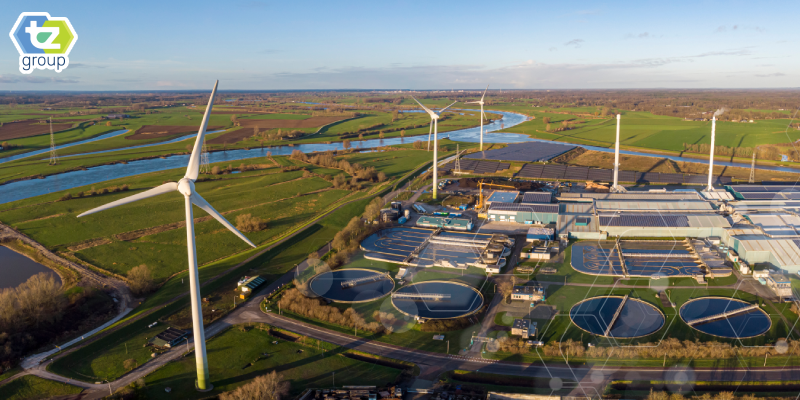
Wastewater treatment is the process of removing contaminants from industrial water before it’s reused or discharged. In 2025, stricter discharge limits from the EPA, the European Union, and other regulatory bodies are reshaping the way companies manage their effluent. For supply chain directors and procurement managers, understanding how to stay compliant, and efficient, is critical. Keep reading to learn more.
What is industrial wastewater treatment?
Industrial wastewater treatment refers to the set of physical, chemical, and biological processes used to clean water contaminated by industrial operations. Depending on the sector (textiles, chemicals, food processing, or manufacturing) the composition of wastewater varies greatly. The goal is to meet regulatory discharge standards, protect ecosystems, and enable water reuse where possible.
What are the 2025 discharge limits from the EPA, EU and Mexico?
What are the new wastewater discharge limits for 2025?
The table below compares current regulatory standards for industrial wastewater discharges, including the U.S. EPA secondary treatment rules, the EU’s Urban Wastewater Directive (2024 recast), and Mexican NOM standards where available.
| Parameter | U.S. EPA (2025) | EU Directive (2024/2025) | Mexico NOM-001-SEMARNAT-2021 |
| BOD₅ | ≤ 30 mg/L (monthly average), ≥85% removal | ≤ 25 mg/L, phased targets for 2030–2039 | ≤ 30 mg/L |
| TSS | ≤ 30 mg/L (monthly average), ≥85% removal | ≤ 35 mg/L, ≥90% removal | ≤ 30 mg/L |
| COD | Not directly regulated (BOD is preferred) | ≤ 125 mg/L, ≥75% removal | ≤ 150 mg/L |
| Total Nitrogen (TN) | State-specific or industry-specific standards | ≤ 6 mg/L by 2036 (≥85% removal) | ≤ 15 mg/L |
| Total Phosphorus (TP) | No national limit; local permits may apply | ≤ 0.5 mg/L by 2036 (≥90% removal) | ≤ 4 mg/L |
| Micropollutants (e.g. PFAS) | Under development; PFAS monitoring ongoing | ≥ 80% removal; extended producer responsibility by 2045 | Not regulated in current NOMs |
Sources:
- S. EPA Secondary Treatment Regulation, 40 CFR Part 133
- EU Urban Wastewater Directive (Directive (EU) 2024/xxx)
- NOM-001-SEMARNAT-2021 (Mexico, published March 2022, enters into force April 2023)
What are the stages of industrial wastewater treatment?
Industrial wastewater treatment follows a structured sequence of processes, each targeting specific contaminants and involving precise chemical interventions. These stages form the backbone of any industrial water treatment system designed for regulatory compliance and operational efficiency.
Throughout all stages, chemical dosing is carefully monitored and adjusted based on real-time sensor data to ensure efficiency and regulatory compliance. Proper integration of each stage, from pH adjustment to final disinfection, is essential for achieving reliable performance and aligning with 2025 discharge standards.
1. Preliminary Treatment
The process begins with preliminary treatment, where raw effluent is passed through screens or grit chambers to remove large solids, oils, and debris. At this stage, chemical pH adjusters, such as acids or caustic soda, are commonly added to neutralize the incoming flow. This pH control is critical to protect biological processes in downstream units and ensure consistent treatment conditions.
2. Primary Treatment
Following this, primary treatment focuses on the removal of suspended solids through sedimentation or flotation. Here, coagulants like ferric chloride and flocculants such as synthetic polymers are dosed to aggregate fine particles and facilitate their separation. These chemicals are introduced just before the wastewater enters clarifiers or dissolved air flotation (DAF) systems, significantly improving the removal of total suspended solids and reducing organic load.
3. Secondary Treatment (Biological)
Next, the wastewater enters the secondary treatment stage, where biological processes degrade dissolved organic matter. Most commonly, this involves activated sludge systems in aerated tanks, where microorganisms consume biochemical oxygen demand (BOD) and ammonia.
To support microbial activity, nutrient dosing, specifically nitrogen and phosphorus, is often required, especially in carbon-rich but nutrient-poor industrial waste streams. Additionally, pH correction is maintained during this phase to sustain a balanced environment for microbial growth. After treatment, a secondary clarifier allows the biomass to settle, and polymers may be used here as well to enhance floc formation and sludge settling.
4. Tertiary Treatment (Advanced Polishing)
Finally, tertiary or advanced treatment is applied to polish the effluent and meet the most stringent discharge limits. This stage often includes sand or membrane filtration to remove residual solids, activated carbon adsorption for trace organic compounds, and chemical precipitation using aluminum or iron salts to eliminate phosphorus.
Disinfection is also a key part of tertiary treatment, with chlorine, ultraviolet (UV) light, or ozone used to eliminate pathogens. If chlorine is used, a dechlorination step, typically involving sodium bisulfite, is applied to neutralize any residual disinfectant before final discharge.
How are companies adapting to wastewater regulations in 2025?
How can industries meet 2025 wastewater standards?
To comply with stricter discharge requirements, companies are rethinking how their industrial water treatment systems are designed, operated, and upgraded. These adaptations are driven by both regulatory pressure and the need for greater sustainability and cost control.
- Install tertiary treatment technologies: Membrane bioreactors (MBR), activated carbon, and ozonation help meet new EU and EPA expectations for micropollutant and nutrient removal.
- Upgrade chemical dosing controls: Automated dosing systems based on online pH, ORP, and nutrient sensors minimize cost and ensure treatment reliability.
- Adopt pre-treatment for high-load streams: Isolating and treating high-strength waste before the main flow improves compliance and reduces chemical demand.
- Monitor emerging contaminants: Especially PFAS, which is a growing concern in both the U.S. and Europe. Early action can help companies prepare for future legal mandates.
What regulations are coming into effect in 2025?
United States (EPA)
- Effluent Guidelines (ELG) Updates: Power sector, chemical manufacturing, and metal finishing facilities must adopt tighter controls.
- PFAS Rulemaking: Several categories of discharges are under review for PFAS restrictions.
European Union
- 2024 Urban Wastewater Directive Revision:
- Extended producer responsibility for pharmaceuticals and cosmetics.
- Micropollutant removal requirements by 2045.
- Nutrient reduction goals (30% by 2033, 70% by 2036, 100% by 2039 for large plants).
Mexico
- NOM-001-SEMARNAT-2021:
- Applies from April 2023 onward.
- Introduces monitoring and stricter COD, nitrogen, and phosphorus thresholds.
Why Industrial Water Treatment Compliance Matters in 2025 and How to Get Support
Industrial wastewater treatment in 2025 is governed by increasingly strict standards across major regions. In the United States, the EPA is reinforcing effluent guidelines with greater specificity by industry, while the European Union has introduced a recast Urban Wastewater Directive that imposes phased requirements for nitrogen, phosphorus, and emerging micropollutants. In Mexico, NOM-001-SEMARNAT-2021 establishes new national benchmarks that took effect in 2023, setting the foundation for more consistent regulatory enforcement.
To remain compliant, industrial facilities must prepare for lower discharge limits, often requiring a combination of advanced treatment technologies and precise chemical dosing strategies. Maintaining optimal pH, solids separation, nutrient balance, and disinfection levels is essential, not only for meeting permit conditions, but also for safeguarding environmental resources and reducing operational risks. Facilities that proactively invest in system upgrades and process optimization will be better positioned to avoid fines, minimize water use, and support corporate sustainability goals.
If your company is reviewing its water treatment strategy, now is the time to act. Contact us at TZ Group to evaluate your current system, identify areas for improvement, and implement solutions aligned with 2025 regulatory requirements. Our team of specialists is ready to support your operations with tailored guidance and proven expertise in industrial water treatment.
